
Virtualization Technology Explained: How Modern IT Infrastructure Works
In the early days of computing, each application required its own dedicated hardware. This approach was costly, inefficient, and difficult to scale. As organizations grew and digital services expanded, traditional infrastructure models became a major bottleneck. This challenge led to the adoption of virtualization, a technology that fundamentally changed how computing resources are created, managed, and delivered. Understanding virtualization technology explained is key to understanding how modern IT infrastructure works today.
Virtualization introduced the idea of separating software from physical hardware. Instead of tying one operating system to one server, organizations could run multiple environments on a single machine using software-based controls. This shift unlocked better resource utilization, faster deployment, and greater flexibility. Technologies such as Virtualization Technology Explained machines, hypervisors, and server virtualization made it possible to build dynamic systems that adapt to changing workloads. Today, virtualization underpins almost every modern digital service. From private data centers to large-scale cloud virtualization platforms, virtualized virtual infrastructure allows IT teams to scale efficiently, improve reliability, and reduce operational costs. In essence, virtualization is no longer just an optimization; it is the foundation upon which modern IT ecosystems are built.
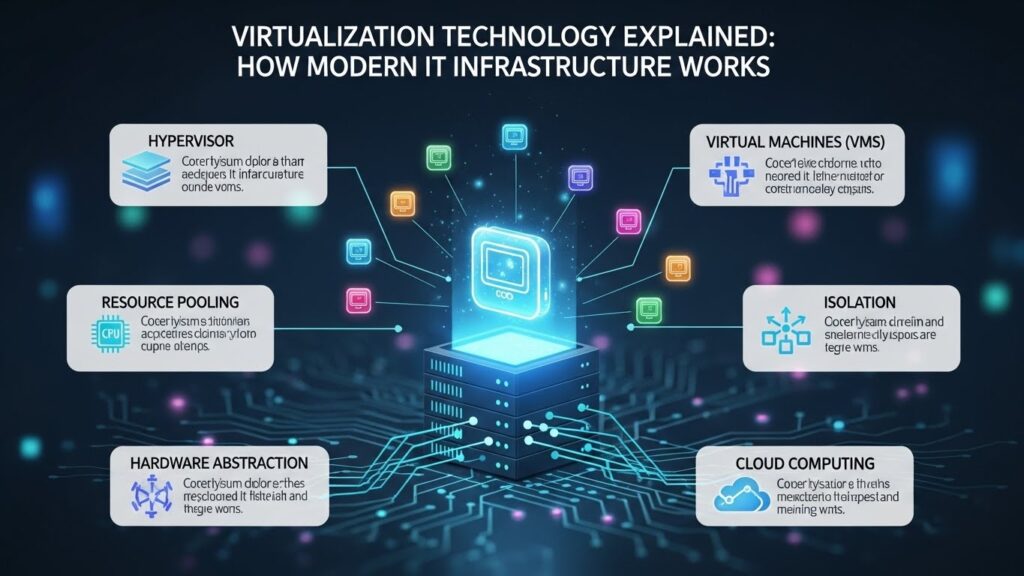
What Is Virtualization Technology?
Virtualization is the process of creating virtual versions of computing resources such as servers, operating systems, storage, or networks. These virtual resources behave like physical ones but are managed through software rather than dedicated hardware.
When virtualization technology explained clearly, it becomes apparent that virtualization separates software from physical machines. This abstraction allows multiple systems to share the same hardware while operating independently. At the center of virtualization is resource optimization. Instead of leaving hardware underutilized, virtualization enables organizations to run multiple workloads efficiently, improving performance and reducing waste.
Virtual Machines:
Virtual machines (VMs) are software-based representations of physical computers. Each virtual machine runs its own operating system and applications, just like a standalone server. VMs are isolated from one another, meaning issues in one virtual machine do not affect others running on the same hardware. This isolation improves security and stability while allowing multiple environments to coexist.
Virtual machines make testing, deployment, and scaling easier. Organizations can create, copy, or remove VMs quickly without modifying physical infrastructure, a major advantage of modern virtual infrastructure.
Hypervisors:
Hypervisors are the software layer that enables virtualization. They sit between physical hardware and virtual machines, managing resources such as CPU, memory, and storage. A hypervisor ensures that each virtual machine receives the resources it needs while preventing conflicts. This control allows multiple VMs to operate efficiently on a single server.
Hypervisors are critical to server virtualization, as they provide the foundation for managing and scaling virtual environments. Without hypervisors, virtual machines could not exist.
Server Virtualization:
Server virtualization is one of the most widely adopted forms of virtualization. It allows multiple virtual servers to run on a single physical server, replacing the traditional one-server-one-application model.
This approach significantly reduces hardware costs, energy consumption, and maintenance overhead. Data centers become more flexible and easier to manage, with faster provisioning and improved disaster recovery. Server virtualization is a key reason modern IT infrastructure can scale quickly and respond to changing demands.
Virtual Infrastructure:
A virtual infrastructure refers to the complete environment created through virtualization. This includes virtual machines, networking, storage, and management tools working together as a unified system.
Virtual infrastructure allows centralized management of resources. Administrators can allocate capacity dynamically, monitor performance, and enforce security policies across all virtual components. This centralized control simplifies operations and supports automation, making virtual infrastructure a cornerstone of modern IT operations.
Cloud Virtualization:
Cloud virtualization applies virtualization principles at massive scale. Cloud providers use virtualization to deliver on-demand computing resources to users worldwide.
Through cloud virtualization, users can access servers, storage, and networking without managing physical hardware. Resources can be scaled up or down instantly, supporting flexibility and cost efficiency. Cloud virtualization is essential for public, private, and hybrid cloud environments. It enables modern digital services to operate reliably at a global scale.
Benefits of Virtualization Technology
Virtualization offers numerous advantages for organizations of all sizes. It improves hardware utilization, reduces costs, and increases agility.
Virtual environments are easier to back up, replicate, and recover, improving resilience and business continuity. Virtualization also supports faster development and testing cycles, accelerating innovation. These benefits explain why virtualization technology explained is a core topic in modern IT education and strategy.
Virtualization vs Traditional Infrastructure
Traditional infrastructure ties software directly to hardware, limiting flexibility. Scaling requires purchasing new servers, which can be slow and expensive.
Virtualization decouples workloads from hardware. Resources can be allocated dynamically, enabling rapid scaling and better utilization. This shift represents a fundamental improvement in infrastructure design. Understanding this difference highlights why virtualization is now standard practice in modern IT environments.
Challenges and Limitations of Virtualization
Despite its advantages, virtualization introduces challenges. Performance overhead, security concerns, and management complexity must be addressed carefully.
Running many virtual machines on shared hardware requires proper configuration to avoid resource contention. Security must be managed at both physical and virtual layers. These challenges underscore the importance of proper planning and skilled management when deploying virtual infrastructure.
The Future of Virtualization Technology Explained
Virtualization continues to evolve alongside cloud computing, automation, and intelligent systems. Future trends include deeper integration with orchestration tools, improved performance, and enhanced security.
As IT environments grow more complex, virtualization will remain essential for managing scale and complexity. Its adaptability ensures long-term relevance in modern computing.
Conclusion:
Understanding virtualization technology explained reveals why virtualization remains one of the most important advancements in computing. By abstracting hardware into flexible, software-defined resources, virtualization enables organizations to build IT environments that are scalable, resilient, and cost-effective. The ability to run multiple virtual machines on shared hardware, managed by hypervisors, has redefined efficiency in data centers and cloud platforms alike.
What makes virtualization especially powerful is its role as an enabler. Server virtualization simplifies infrastructure management, while a unified virtual infrastructure allows centralized control, automation, and rapid deployment. At the cloud level, cloud virtualization extends these benefits globally, making computing resources available on demand without physical limitations. As IT environments continue to grow in complexity, virtualization remains a critical layer that supports innovation and stability. It allows businesses to adapt quickly, recover faster from failures, and scale services without massive hardware investments. Looking ahead, virtualization will continue to evolve alongside automation, orchestration, and intelligent systems Virtualization Technology Explained, ensuring its place as a foundational pillar of modern IT infrastructure for years to come.
FAQs:
What is Virtualization Technology Explained in simple terms.
Virtualization allows multiple virtual systems to run on one physical machine.
What are virtual machines used for?
Virtual machines run applications and operating systems independently on shared hardware.
What role do hypervisors play?
Hypervisors manage resources and enable virtual machines to operate.
How does server virtualization help businesses?
It reduces costs, improves efficiency, and simplifies infrastructure management.
Is cloud virtualization the same as virtualization?
Cloud virtualization uses virtualization at large scale to deliver cloud services.


