
How to Save Money by Remortgaging: Calculator Examples
Remortgaging can be one of the most effective ways to save money on your mortgage, but knowing where to start is essential. Whether you want to reduce your monthly payments, take advantage of lower interest rates, or release equity for home improvements, careful planning can make a big difference.
A Remortgage Calculator is an essential tool for homeowners considering a remortgage. It allows you to input your current mortgage details, explore different deals, and estimate potential savings, giving you a clear picture before making any decisions. In this guide, we’ll show you how to use this Calculator with practical examples to maximise your savings and make informed choices.
Understanding Remortgaging and Its Benefits
Remortgaging is the process of replacing your existing mortgage with a new deal, either with your current lender or a different one. The main goal is often to save money, but there are several ways it can benefit homeowners. One of the primary advantages is reducing your monthly payments. By switching to a mortgage with a lower interest rate, you can free up extra cash each month, which can be used for savings, investments, or daily expenses. Another benefit is the ability to release equity from your property. This allows you to access funds for home renovations, debt consolidation, or other major expenses without taking out a separate loan.
Remortgaging can also provide better financial flexibility. For example, if your financial situation has improved since you first took out your mortgage, you may qualify for a more favourable deal with lower interest rates or shorter terms. Additionally, it gives you the opportunity to move from a variable-rate mortgage to a fixed-rate deal, offering more predictable payments and stability in uncertain financial climates. Before making any decisions, it’s important to calculate potential savings and costs. A Remortgage Calculator can help you weigh the benefits of different deals, estimate monthly savings, and see the long-term impact of remortgaging, ensuring you make a financially sound choice.
How a Remortgage Calculator Works?
This Calculator is a powerful tool that simplifies the process of assessing your mortgage options. It allows homeowners to quickly see potential savings and compare different deals without relying on complex manual calculations. Using a calculator helps ensure you make informed decisions that fit your financial goals. Here’s a step-by-step guide to using this Calculator effectively:
Step 1: Gather Your Mortgage Details
Before you start, collect information about your current mortgage, including the outstanding balance, interest rate, remaining term, and any early repayment charges. Accurate data ensures reliable results from the calculator.
Step 2: Input Your Current Mortgage Information
Enter your existing mortgage details into the calculator. This typically includes your outstanding loan amount, current interest rate, and remaining years on your mortgage.
Step 3: Add New Deal Options
Next, input the details of the remortgage deals you are considering. Include interest rates, term length, and any associated fees or charges. This helps the calculator compare your current mortgage with potential new deals.
Step 4: Analyse Monthly Payments and Total Costs
The calculator will generate an estimate of your new monthly payments and show potential savings over time. Many calculators also factor in fees and early repayment charges to give a realistic picture of the overall financial impact.
Step 5: Compare Different Scenarios
Some calculators allow you to explore multiple scenarios. For example, you can compare fixed-rate vs. variable-rate mortgages or different term lengths. This step helps you understand which option maximises savings while meeting your long-term goals.
Using a Remortgage Calculator takes the guesswork out of remortgaging. For more tools and guidance, visit Fincalc.uk to explore a variety of calculators and resources that help you plan your finances effectively.
Real-Life Calculator Examples
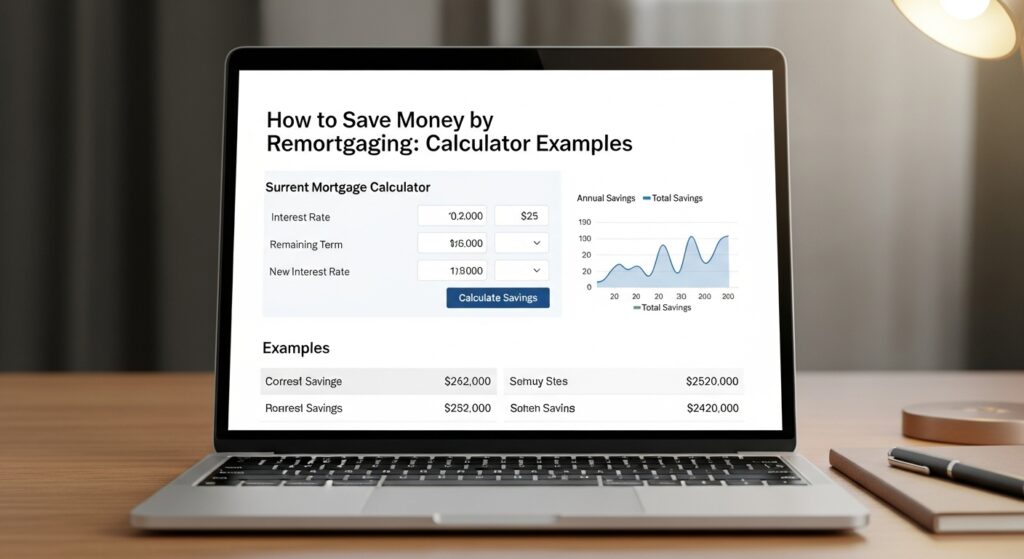
To understand how a Remortgage can help you save money, let’s look at a few practical examples. These scenarios illustrate how switching to a better mortgage deal can reduce monthly payments and overall costs.
Example 1: Lowering Monthly Payments
Suppose you have a current mortgage of £200,000 with an interest rate of 4% over 25 years. Using a Remortgage Calculator, you find a new deal at 3% interest. The calculator shows that your monthly payment could drop by approximately £95, saving over £28,500 in interest across the term.
Example 2: Releasing Equity for Home Improvements
If your property value has increased, you might want to access some of your equity. For instance, your home is now worth £300,000, and you owe £150,000. Using a calculator, you explore a remortgage deal to borrow an additional £30,000 for renovations. The calculator estimates the new monthly payment and shows the total interest cost, helping you plan your finances responsibly.
Example 3: Comparing Fixed vs. Variable Rates
Imagine your current mortgage has a variable rate, and you’re concerned about future interest rate hikes. A Remortgage can compare a fixed-rate option to your current deal, showing potential savings if rates rise or fall. This allows you to choose the option that offers both stability and cost efficiency.
These examples demonstrate how a calculator can provide clarity and confidence before committing to a new mortgage deal. For more detailed property and mortgage insights, visit Fincalc.uk/mortgage-property to explore tools that help you make informed financial decisions.
Factors to Consider Before Remortgaging
While remortgaging can lead to significant savings, it’s essential to consider several factors before making a decision. Being aware of potential costs and risks ensures you make a financially sound choice.
Early Repayment Charges
Many existing mortgages include early repayment charges (ERCs) if you switch deals before the end of your current term. These fees can sometimes reduce or even eliminate the financial benefits of remortgaging, so it’s important to check your mortgage agreement.
Arrangement and Legal Fees
Remortgaging often involves additional costs, such as arrangement fees, valuation fees, and legal expenses. A Remortgage Calculator can help you factor these fees into your calculations to determine your net savings.
Affordability and Long-Term Planning
Consider your overall financial situation and plans. While a lower monthly payment may seem appealing, make sure it fits your long-term budget. Life changes, such as starting a family or changing jobs, can impact your ability to afford new mortgage terms.
Interest Rate Type
Decide whether a fixed-rate or variable-rate mortgage suits your needs. Fixed rates provide predictable monthly payments, while variable rates can offer savings if interest rates fall. A calculator can simulate different scenarios to help you make the right choice.
Property Value and Equity
Your property’s current value and the equity you hold can influence the mortgage deals available to you. Higher equity often leads to better interest rates and terms, making it a crucial factor when using this Calculator.
By carefully evaluating these factors, you can ensure that remortgaging delivers real financial benefits rather than unexpected costs.
Tips to Maximise Savings When Remortgaging
Remortgaging can save you a significant amount of money if approached strategically. Here are some practical tips to ensure you get the most out of your new mortgage deal:
- Use a Remortgage Calculator
A Remortgage Calculator is your best tool for estimating savings and comparing different deals. Input your current mortgage details, potential interest rates, and any fees to see the real financial impact. This allows you to make informed decisions and avoid surprises.
- Compare Multiple Deals
Don’t settle for the first offer you find. Compare deals from different lenders and consider both fixed and variable-rate options. This helps you identify the most cost-effective choice.
- Negotiate Fees and Rates
Some lenders may offer reduced arrangement or valuation fees if you ask. Additionally, check if you qualify for loyalty discounts or special offers that could lower your costs.
- Consider Shorter Term Mortgages
While longer terms reduce monthly payments, shorter mortgage terms often save money in the long run by reducing total interest paid. Use a calculator to model both options and determine which is more beneficial.
- Review Your Credit Score and Equity
A higher credit score or increased equity can lead to better mortgage rates. Check your credit report and consider paying down debt to improve your score before remortgaging.
Conclusion
Remortgaging is a powerful way to save money, reduce monthly payments, and access additional funds, but it’s essential to plan carefully. By understanding your options, evaluating costs, and considering key factors like early repayment charges and property equity, you can make informed decisions that benefit your finances. A Remortgage Calculator is an invaluable tool in this process.
It allows you to compare deals, estimate potential savings, and factor in fees, giving you a clear picture of the financial impact before committing. Whether you aim to lower monthly costs, release equity for home improvements, or secure a better interest rate, using this Calculator ensures you maximise your savings and make confident financial choices. Start exploring your options today to take full control of your mortgage and future finances.
FAQs
How much can I realistically save by remortgaging?
The amount you can save depends on your current mortgage rate, the new deal, and any associated fees. Using a Remortgage Calculator can give you a clear estimate of potential monthly and long-term savings.
Can remortgaging help me pay off my mortgage sooner?
Yes. By securing a lower interest rate or adjusting your term, remortgaging can reduce the total interest paid and allow you to pay off your mortgage faster.
What types of mortgage deals should I compare?
You should compare fixed-rate and variable-rate mortgages, as well as different term lengths and fees. A Remortgage Calculator can simulate these options to see which provides the most savings.
Does my property’s value affect remortgaging savings?
Yes. Higher property equity can give you access to better deals with lower interest rates, which can increase your potential savings.
How often should I check if remortgaging is beneficial?
It’s a good idea to review your mortgage every 1–2 years or when interest rates change significantly. Using this Calculator regularly helps you identify opportunities to save money.