
How Does an NI Contributions Calculator Help You Track Your National Insurance?
National Insurance (NI) contributions are a key part of the UK’s tax system, yet many people don’t fully understand what they are or why they pay them. These contributions help fund vital state benefits, including the NHS, pensions, and unemployment support, ensuring that essential services remain available for everyone.
For employees, self-employed individuals, and employers alike, keeping track of NI payments is important, not just for compliance, but also to understand how much of your earnings actually go towards these contributions. This is where an NI Contributions Calculator comes in handy. By entering your salary and employment details, the calculator provides a clear estimate of your NI payments, helping you plan your finances and avoid surprises at the end of the tax year. In this article, we’ll break down what National Insurance contributions are, why they matter, and how using a calculator can give you a better understanding of your contributions.
What Are National Insurance Contributions?
National Insurance (NI) contributions are payments made by employees, employers, and self-employed individuals in the UK to fund a range of state benefits and public services. While often grouped with income tax, NI contributions are a separate system designed specifically to support social security programs. For employees, these contributions are automatically deducted from their salary by their employer through the Pay As You Earn (PAYE) system, whereas self-employed individuals pay them directly, usually as part of their annual tax return. There are different classes of National Insurance contributions, each serving a slightly different purpose. Class 1 contributions are paid by employees and their employers, based on the employee’s earnings above a certain threshold. Class 2 and Class 4 contributions are paid by self-employed individuals, with Class 2 being a flat weekly rate and Class 4 being based on a percentage of annual profits.
Understanding which class applies to you is essential, as it determines how much you pay and what benefits you are entitled to, such as the state pension, maternity allowance, or certain sickness and unemployment benefits. Essentially, National Insurance contributions are more than just another deduction from your paycheck; they represent a long-term investment in your own social security and the wider UK welfare system. Keeping track of your contributions ensures you remain eligible for the benefits you may need in the future while also helping you manage your current finances effectively. Tools like an NI Contributions Calculator make this process easier by providing clear estimates based on your earnings and employment type, giving you a better understanding of your contributions at a glance.
Why do You Pay National Insurance Contributions?
National Insurance contributions are more than just a routine deduction from your salary; they serve a crucial purpose in the UK’s social welfare system. By paying NI, you are directly contributing to the funding of essential public services, including the National Health Service (NHS), state pensions, unemployment benefits, and sickness or disability allowances. These contributions create a safety net that provides financial support during times of need, whether that’s during illness, maternity leave, or after retirement.
For employees, paying NI is a legal requirement, and the amount you contribute is usually based on your earnings. Employers also contribute on your behalf, which helps ensure that the system remains sustainable for everyone. Self-employed individuals contribute through a different system but are still included in the network of social protection. Paying the correct amount of NI is important, as it not only affects your eligibility for benefits but also determines the size of your future state pension. Failing to pay or underpaying can result in penalties or gaps in your entitlement to benefits. In short, National Insurance contributions are a shared responsibility that supports both your own long-term financial security and the well-being of the wider community. They act as an investment in public services that everyone relies on at some stage in life. Using an NI Contributions Calculator can help you understand exactly how much you are paying, giving you clearer insight into how your money is being used and helping you plan for your financial future more effectively.
How an NI Contributions Calculator Works
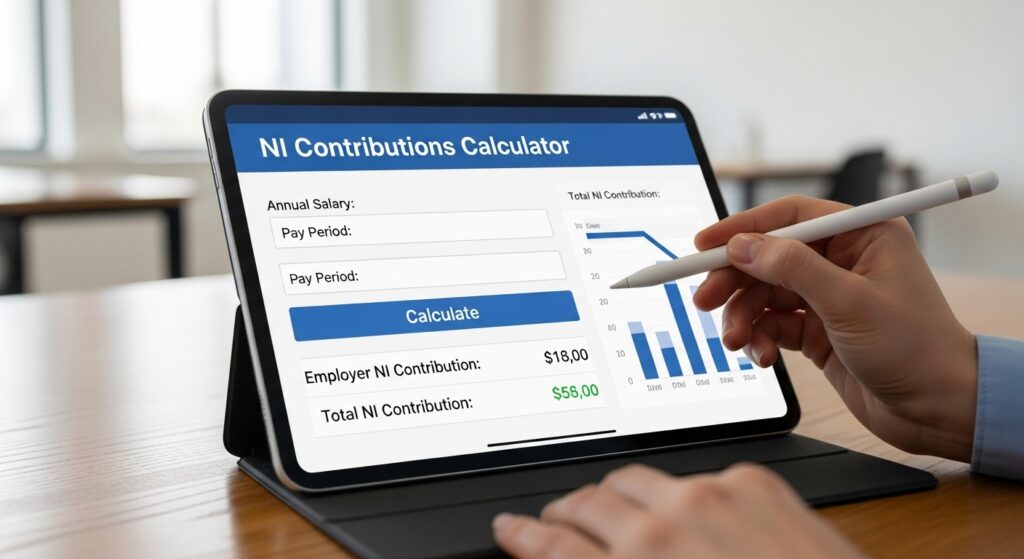
An NI Contributions Calculator is a simple yet powerful tool that helps you estimate how much National Insurance you are required to pay based on your income and employment type. Rather than manually calculating your contributions using complex thresholds and rates, the calculator streamlines the process by allowing you to enter key details such as your annual or monthly salary, whether you are employed or self-employed, and your applicable NI class. Once the information is entered, the calculator quickly provides a clear estimate of your monthly or yearly contributions.
The tool works by applying the current NI rates and thresholds set by HM Revenue & Customs (HMRC). For employees, it calculates Class 1 contributions, which are based on earnings above the primary threshold, while also considering employer contributions. For self-employed users, it computes Class 2 and Class 4 contributions according to profits and applicable rates. Many calculators also include additional features, such as factoring in voluntary contributions or adjusting for part-year earnings, giving you an accurate picture of your total NI liability. Using an NI Contributions Calculator not only saves time but also helps you plan your finances more effectively. It can show the impact of different salary levels, allow you to compare job offers, or help self-employed individuals budget for upcoming payments. Ultimately, the calculator provides transparency, ensuring you understand exactly how much you are contributing and helping you avoid surprises during the tax year.
Conclusion
National Insurance contributions play a vital role in supporting the UK’s social welfare system, funding services such as the NHS, state pensions, and various benefits that provide financial security during times of need. Understanding what you pay and why is essential not only for compliance but also for effective personal financial planning. An NI Contributions Calculator makes this process simple by offering accurate estimates based on your earnings, employment type, and applicable contribution class.
By regularly checking your contributions with such a tool, you can gain clarity on your deductions, plan your budget more effectively, and make informed decisions about your financial future. Whether you are an employee, employer, or self-employed individual, staying aware of your National Insurance obligations ensures you remain eligible for the benefits you may need while contributing to the wider social safety net. Ultimately, knowing how much you pay and how it is used empowers you to take control of your finances and make smarter decisions for both the present and the future.
FAQs
What happens if I don’t pay National Insurance contributions?
Failing to pay NI contributions can result in penalties, fines, and gaps in your entitlement to state benefits, including the state pension. It is important to ensure contributions are up to date to remain eligible for these benefits.
Can I reduce my National Insurance contributions legally?
While you cannot avoid NI contributions entirely if you are earning above the threshold, certain strategies like salary sacrifice schemes or pension contributions can reduce the amount of taxable earnings, which may slightly lower your NI payments. Always consult HMRC or a financial advisor before making changes.
How do NI contributions affect my state pension?
Your entitlement to the state pension depends on the number of qualifying years of National Insurance contributions. Regular contributions help build your pension, while gaps can reduce the amount you receive upon retirement.
Who needs to pay National Insurance contributions?
Employees, employers, and self-employed individuals all pay NI contributions, though the rates and classes differ. Employees pay Class 1, while self-employed people pay Class 2 and Class 4 contributions.