
Freeway Rick Ross Net Worth Explained 2026
Freeway Rick Ross, born Ricky Donnell Ross, is a former American drug trafficker turned author whose life story continues to attract global attention. Best known for building a massive Los Angeles-based cocaine empire during the early 1980s, his rise and fall directly shaped discussions around the Freeway Rick Ross net worth today. Raised near Interstate 110 (Harbor Freeway), Ross earned his nickname from the area where his operations flourished. Over time, his name became widely recognized, often confused with rapper Rick Ross (William Leonard Roberts II), despite their very different paths.
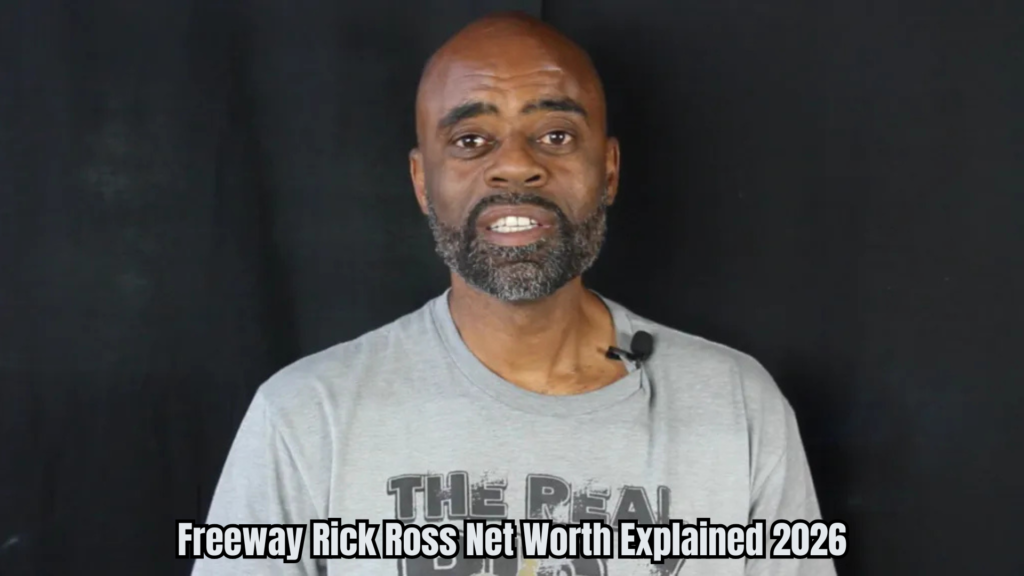
Peak Wealth and the $3 Million-a-Day Empire
At his peak, Freeway Rick Ross operated one of the most profitable drug networks in U.S. history, a period that heavily influenced discussions around Freeway Rick Ross net worth. Federal prosecutors estimated that between 1982 and 1989, Ross moved several metric tons of cocaine, generating up to $3 million per day in cash flow. His distribution stretched across more than 40 cities, including Los Angeles, Ohio, and New York. Although his claimed peak wealth exceeded $600 million, much of this money was untraceable cash, not protected assets, which explains why the Freeway Rick Ross worth today looks dramatically smaller.
Early Life and the Origins of “Freeway”
Freeway Rick Ross, legally named Ricky Donnell Ross, was born on January 26, 1960, in Texas before moving to Los Angeles at a young age with his mother, Annie Mae Ross. He grew up near Interstate 110, also known as the Harbor Freeway, which later inspired his famous nickname. During his teenage years in South Central Los Angeles, Ross focused heavily on tennis and attended Susan Miller Dorsey High School. However, illiteracy prevented him from securing a college scholarship, a turning point that eventually redirected his life toward crime and later shaped the story behind the Freeway Rick Ross net worth.
Entry Into the Cocaine Trade
The downfall of Freeway Rick Ross began when limited opportunities pushed him toward illegal income, a decision that later defined the Freeway Rick Ross net worth narrative. After failing to secure a tennis scholarship due to illiteracy, Ross was introduced to cocaine through an instructor at a local community college in Los Angeles. Small-scale sales quickly turned into a steady operation, allowing Freeway Rick Ross to reinvest profits and expand. His connections soon led him to suppliers such as Ivan Arguellas and Henry Corrales, marking the transition from street-level dealing to large-volume distribution that fueled his rapid financial rise.
Building a Nationwide Drug Network
As operations scaled rapidly, Freeway Rick Ross transformed a local venture into a nationwide enterprise, reshaping perceptions of the Freeway Rick Ross net worth. Through key connections with Danilo Blandón and Norwin Meneses, Ross gained access to low-cost Nicaraguan cocaine, allowing him to undercut competitors. His network expanded beyond Los Angeles into cities such as St. Louis, Cleveland, Baltimore, and Seattle, with distribution reaching street gangs like the Bloods and Crips. This aggressive expansion dramatically increased cash flow, but it also attracted federal attention, laying the groundwork for future arrests and the eventual collapse of the Freeway Rick Ross net empire.
CIA Allegations and Iran
One of the most controversial chapters in Freeway Rick Ross’s story involves alleged ties to the CIA and the Iran–Contra Affair, which continue to influence debates about the Freeway Rick Ross net worth. Investigative journalist Gary Webb reported that Ross’s supplier, Danilo Blandón, had links to CIA-backed Contra funding efforts. These claims suggested that Ross unknowingly benefited from government protection while distributing cocaine in Los Angeles. Although U.S. agencies denied direct involvement, the allegations intensified public scrutiny and reframed how the rise and collapse of the Freeway Rick Ross net worth were understood.
Arrest, Life Sentence, and Legal Turnaround
The rapid rise of Freeway Rick Ross eventually drew intense law enforcement focus, drastically altering the Freeway Rick Ross net worth trajectory. In 1996, Ross was convicted under federal drug trafficking charges and sentenced to life imprisonment under the three-strikes law. While incarcerated, Freeway Rick Ross taught himself to read and spent years studying legal texts in prison libraries. This self-education proved critical, as he identified errors in how the law was applied to his case. After multiple appeals, a federal court reduced his sentence to 20 years, leading to his release in 2009.
Financial Collapse and Asset Loss
The dramatic fall of Freeway Rick Ross resulted in the near-total destruction of the Freeway Rick Ross net worth accumulated during the 1980s. Following his arrest, federal authorities seized cash, properties, and other assets tied to drug trafficking activities. Much of Ross’s wealth existed as untraceable cash, making it impossible to preserve or reinvest legally. Extended imprisonment also prevented any form of financial recovery during his prime earning years. By the time Freeway Rick Ross was released in 2009, the empire that once generated millions daily had completely vanished, leaving little lasting financial security.
Life After Prison and Income Sources
After his release in 2009, Freeway Rick Ross shifted toward legitimate ventures, redefining the modern Freeway Rick Ross. Rather than relying on his past, Ross focused on entrepreneurship, public speaking, and storytelling. A major income stream comes from his autobiography, Freeway Rick Ross: The Untold Autobiography, along with paid appearances and interviews. He has also featured on platforms like The Joe Rogan Experience, expanding his audience. In recent years, Freeway Rick Ross has reported earnings from a marijuana dispensary and boxing management, creating lawful and sustainable income.
Lawsuit Against Rapper Rick Ross
A notable chapter affecting public perception of Freeway Rick Ross involved his legal battle with rapper Rick Ross, born William Leonard Roberts II, which indirectly shaped conversations around the Freeway Rick Ross net worth. In 2010, Ross filed a lawsuit claiming the rapper unlawfully used his name for commercial gain. He sought $10 million in damages, arguing identity and publicity rights violations. Courts ultimately ruled in favor of the rapper, citing First Amendment protections. Although Freeway Rick Ross lost the case, the lawsuit renewed media interest in his life story and financial history.
Freeway Rick Ross in Media and Pop Culture
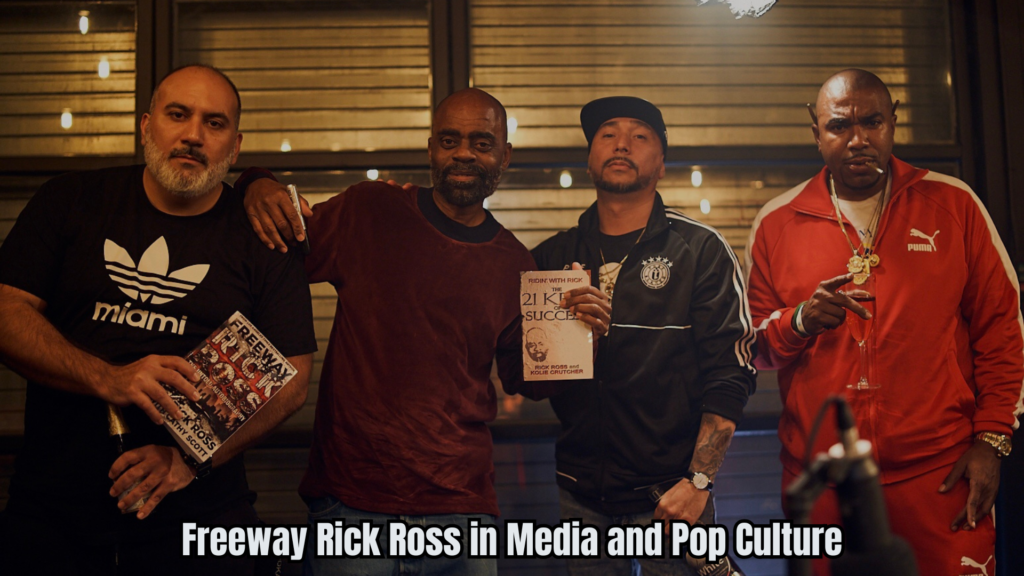
The story of Freeway Rick Ross has been widely explored in documentaries, films, and television, keeping interest in the Freeway Rick Ross net worth alive. He appeared prominently in the Emmy-nominated documentary Freeway: Crack in the System, which examined the wider impact of the crack cocaine epidemic. Ross was also featured in BET’s American Gangster and portrayed by Michael K. Williams in the film Kill the Messenger. He has claimed his life influenced the FX series Snowfall, further cementing Freeway Rick Ross as a lasting cultural figure beyond his criminal past.
Conclusion
The story behind the Net Worth Freeway Rick Ross is a rare blend of extreme financial rise and total collapse. Freeway Rick Ross once controlled millions in daily cash flow, yet today his wealth reflects only what survived legal consequences and time. His journey—from Los Angeles streets to federal prison, and later to authorship and entrepreneurship—shows how fast money without structure disappears. Ultimately, the Freeway Rick Ross net worth represents more than a number; it stands as a long-term lesson about legality, education, and sustainable income in shaping real financial security.
FAQs
The Freeway Rick Ross net worth is estimated at around $1 million. Despite controlling massive cash flow during the 1980s, most of his wealth was seized or lost due to arrests, convictions, and long-term imprisonment.
Freeway Rick Ross made his money primarily through cocaine trafficking in Los Angeles and across more than 40 U.S. cities. At his peak, prosecutors claimed his network generated up to $3 million per day in revenue.
The Freeway Rick Ross net worth is low today because his earnings were largely unprotected cash. Asset seizures, legal penalties, and years in prison eliminated most of his wealth, leaving little opportunity for reinvestment.
No. Freeway Rick Ross is a former drug trafficker and author, while Rick Ross (William Leonard Roberts II) is a rapper and entrepreneur. They are different individuals with very different careers and net worths.
Today, Freeway Rick Ross earns income from book sales, public speaking, media appearances, and business ventures such as a marijuana dispensary, which collectively support his current net worth.


